Speaking with Business Today Egypt, Gilabert shared his insights on the importance of these efforts on the sidelines of the a GEIPP event.
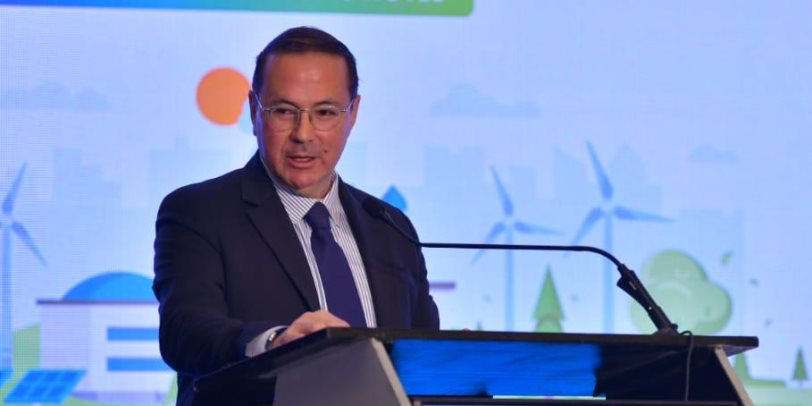
In a recent discussion with Patrick Gilabert, the UNIDO (United Nations Industrial Development Organization) Regional Representative for Egypt, the focus was placed on the vital role of the Global Eco-Industrial Parks Program in Egypt (Green Eco-Industrial Park Project) in driving sustainability and economic progress in Egypt.
The GEIPP, part of a broader UNIDO initiative, aims to enhance industrial practices across the country, fostering both environmental responsibility and economic growth.
Speaking with Business Today Egypt, Gilabert shared his insights on the importance of these efforts on the sidelines of the a GEIPP event.
The GEIPP-Egypt, funded by the Swiss State Secretariat for Economic Affairs (SECO), aims to demonstrate the feasibility and benefits of eco-industrial parks.
The program’s objective is to enhance resource productivity and improve the economic, environmental, and social performance of industries, and is being implemented in three key industrial zones in Egypt: Orascom Industrial Park, Polaris Industrial Park, and the Robbiki Leather Cluster.
“We make it a point to coordinate across all project coordinators to leverage the impact of each project. For instance, the GEIPP activities have already addressed challenges in [the] three industrial parks,” he told BT.
Gilabert emphasized that the GEIPP has already made considerable strides in its environmental, social, and performance outcomes.
Companies participating in the program have collectively saved approximately $10 million.
This is a direct result of enhanced resource efficiency and greener practices introduced in these industrial parks, making them more sustainable and economically viable.
Gilabert also spoke about the broader UNIDO portfolio in the country, which includes 23 projects totaling $58 million, many of which focus on sustainability.
He explained that these initiatives work together in a coordinated effort to amplify their collective impact. The GEIPP, as part of this larger portfolio, has addressed key challenges in the three industrial parks, laying the groundwork for the next phase of projects, which are currently being developed by his colleague Jérôme Stucki, Unit Chief, Circular Economy and Resource Efficiency at UNIDO.
The impact of the GEIPP extends beyond the immediate financial savings. As industrial parks become more eco-friendly, Egypt is positioning itself to remain competitive on the international stage.
“While Egypt is not yet in the top 20, it remains an important player in international competition,” Gilabert explained.
By aligning with global environmental standards, Egypt's industrial sectors are better equipped to compete in key markets such as the EU, USA, and Japan, where sustainability is increasingly a priority.
The adoption of green practices is essential for meeting the growing global demand for sustainable goods and services, ensuring that Egypt’s industries can thrive while contributing to global environmental goals.
The concept of Eco-Industrial Parks is gaining traction globally. Many countries are now recognizing the value of integrating sustainability into their industrial sectors.
When asked about a statistic on how EIPs impact countries economically, Gilbert explained “It’s difficult to provide an exact number because assessing the impact of EIPs globally is complex. However, we can see a growing trend where countries are increasingly establishing more industrial parks.”
Gilabert noted that the trend is particularly strong in countries with established industrial parks, as these facilities bring together resources like water, energy, and raw materials, creating a favorable environment for eco-industrial practices.
According to Gilabert, this adoption not only helps these countries comply with international environmental, social, and governance (ESG) regulations but also provides a competitive edge by attracting foreign direct investment.
This shift has led to a change in the mindset of industrial park developers, who are now keen to adopt sustainable practices “because they recognize the competitive advantage they offer”.
For Egypt, the adoption of EIP principles is expected to create new economic opportunities.
“Making Egypt’s industrial parks greener is vital, as it contributes to the country’s efforts to reduce pollution, save water, and use energy more efficiently. This shift not only benefits the country environmentally but also helps companies stay competitive internationally, enabling them to continue exporting to key markets like the EU,” Gilabert told us.
As the program continues to evolve, Gilabert believes that Egypt’s efforts to integrate sustainability into its industrial parks will lead to long-term economic growth and development.
Gilabert expressed optimism about the next phase of projects, which will continue to build on the lessons learned from the GEIPP.
Among the highlights of the GEIPP event were discussions on the promotion and mainstreaming of the Eco-Industrial Parks (EIP) approach within Egyptian policies.
The initiative aims to create a balance between industrial development and environmental preservation while generating new economic opportunities. This final event was attended by key officials and stakeholders, including Bernhard Soland, Deputy Head of Office for International Cooperation at the Embassy of Switzerland, and Emad Abdelhameed, Assistant to the Minister for Developmental Projects and Financial Affairs at the Ministry of Industry.